

Amphetamine Test for Caffeine: A Simple Qualitative Detection Method
Amphetamine Test for Caffeine Introduction
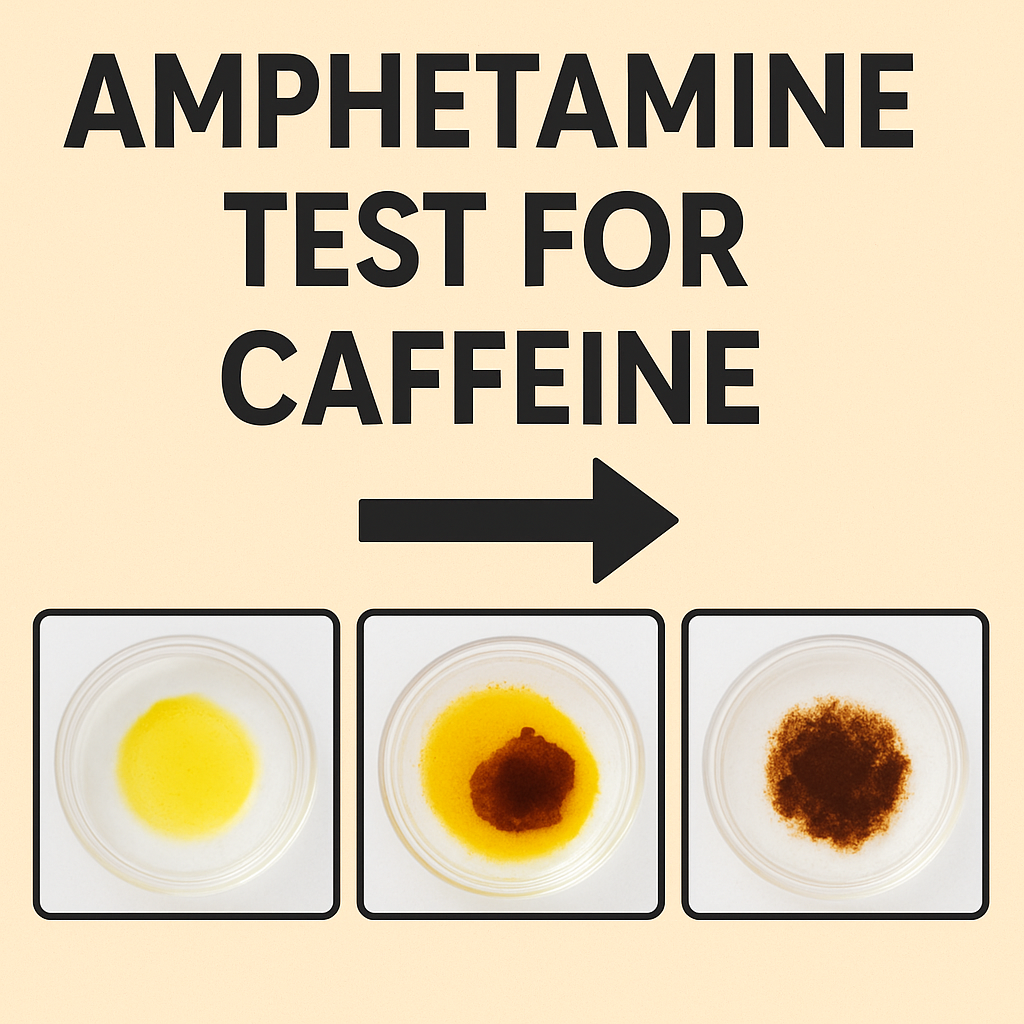
Given the increasing instances where amphetamine is either completely replaced by caffeine or mixed with it, we are sharing a straightforward Amphetamine Test for Caffeine. This qualitative procedure allows for visual identification of caffeine presence in a sample.
Materials Required:
- Concentrated Nitric Acid (~68%) – available at most chemical reagent suppliers.
- Ammonia Solution (25%) – note that 10% solutions are insufficient; 25% can be easily purchased from online chemical supply retailers.
Step-by-Step Instructions for Amphetamine Testing:
- Prepare the Sample
Place the substance into a heat-resistant container made of transparent or white glass. It’s important that the material allows you to clearly observe any color changes or reactions. - Apply Nitric Acid
Add a few drops of concentrated nitric acid to the sample. - Evaporate to Dryness
Gently heat the mixture until it has completely evaporated. - Add Ammonia Solution
Once dry, add the 25% ammonia solution to the residue. - Evaporate Again
Heat the sample again until all liquid has evaporated.
Amphetamine Test Interpreting the Results:
Compare the final appearance of the sample with the visual references provided:
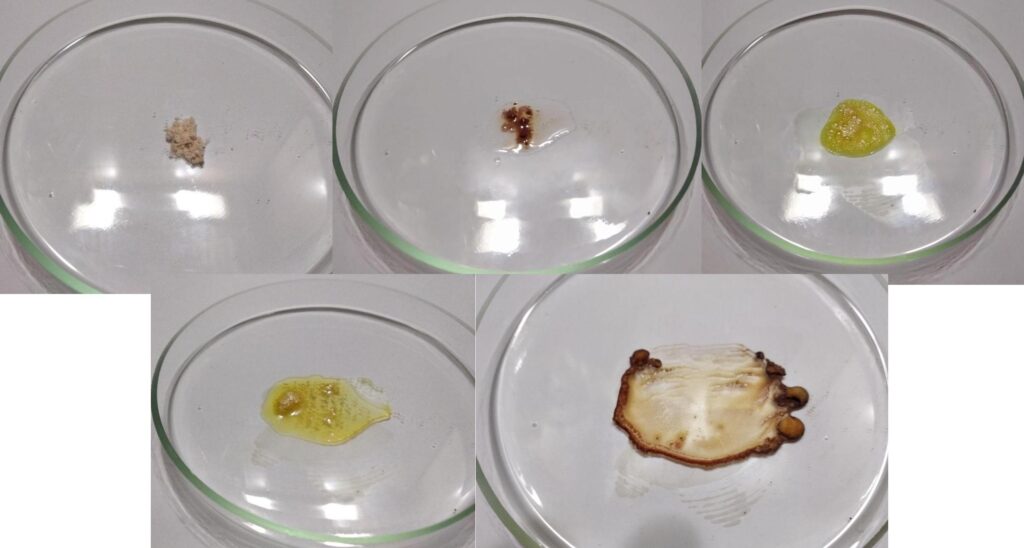
- 1. Complete Substitution (Amphetamine Replaced by Caffeine)
The result will match images 1.
- 2. Mixture of Caffeine and Amphetamine (Approx. 30% Caffeine, 70% Amphetamine)
The result will correspond to image 2.

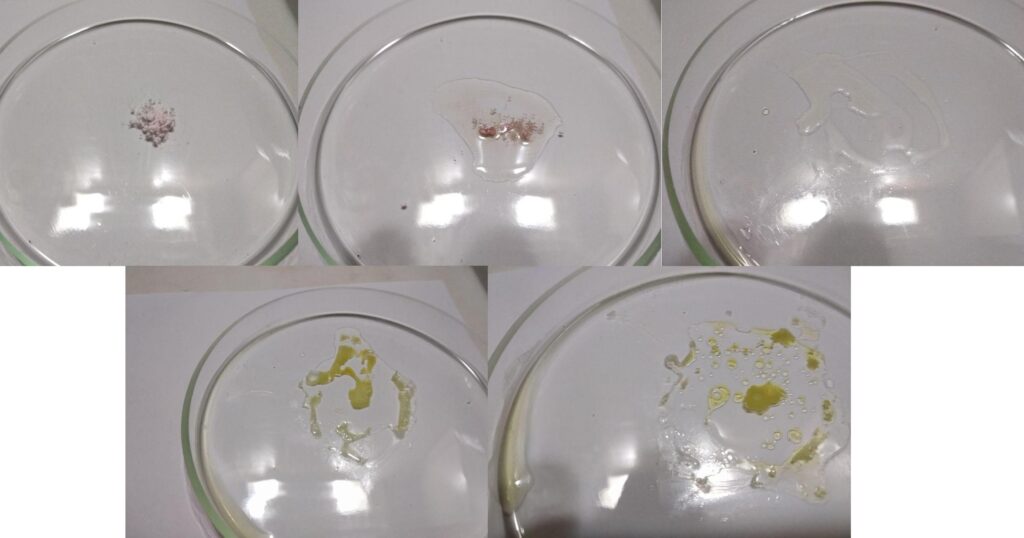
- 3. Pure Amphetamine Sample
The final result should resemble image 3.
Amphetamine Test Final Observations:
- The brighter the yellow coloration, the higher the concentration of amphetamine.
- When ammonia is added to amphetamine, a distinct oil-like residue can form.
- In contrast, caffeine reacts with ammonia to produce a red-brown residue upon drying.
This Amphetamine Test for Caffeine offers a quick and effective visual method to assess whether a sample contains caffeine, amphetamine, or a mixture of both.
Conclusion
The Amphetamine Test for Caffeine is a practical, low-cost method for quickly identifying whether a substance contains caffeine, amphetamine, or a combination of both. By relying on clear visual indicators—such as color changes and residue characteristics—it enables fast, on-the-spot analysis without the need for advanced laboratory equipment. This makes it a valuable tool for both safety verification and preliminary substance screening, helping to prevent misuse and ensure product authenticity.
Sources
- KOZUKA, HIROSHI, M. A. T. A. J. I. R. O. KoYAMA, and TOMOAKI OKITSU. “Murexide reaction of caffeine using nitric acid.” Chemical and Pharmaceutical Bulletin 30.3 (1982): 941-945. https://www.jstage.jst.go.jp/article/cpb1958/30/3/30_3_941/_article/-char/ja/
- Bruce, C., D. H. Yates, and P. S. Thomas. “Caffeine decreases exhaled nitric oxide.” Thorax 57.4 (2002): 361-363. https://pmc.ncbi.nlm.nih.gov/articles/PMC1746303/pdf/v057p00361.pdf
- Sánchez-Viesca, Francisco, and Reina Gómez. “A novel transamination reaction in a murexide-like sequence for caffeine detection.” Earthline Journal of Chemical Sciences 11.3 (2024): 437-444. https://www.earthlinepublishers.com/index.php/ejcs/article/view/900