
DMT vs Ayahuasca: Key Differences and Facts
Overview of DMT vs Ayahuasca
N,N-Dimethyltryptamine (DMT) is a powerful, naturally occurring psychedelic compound found in many plant species and even produced in tiny amounts by the human body. In pure form, it is a white crystalline powder typically vaporized or smoked for a very short, intense psychedelic trip. Ayahuasca, by contrast, is a traditional South American brew or tea containing DMT. The classic recipe combines a DMT-rich plant (often the leaf of Psychotria viridis) with a vine (Banisteriopsis caapi) that contains monoamine oxidase inhibitors (MAOIs). These MAOIs block the gut enzyme that normally destroys DMT, allowing the DMT to be active when swallowed. In short, DMT is the pure psychedelic molecule, while ayahuasca is a herbal preparation that makes oral DMT effective. DMT vs Ayahuasca are often discussed in the field of psychedelic substances, but knowing the difference between DMT and ayahuasca is important for understanding their unique properties, effects, and cultural significance.
Consumption and Duration of Effects
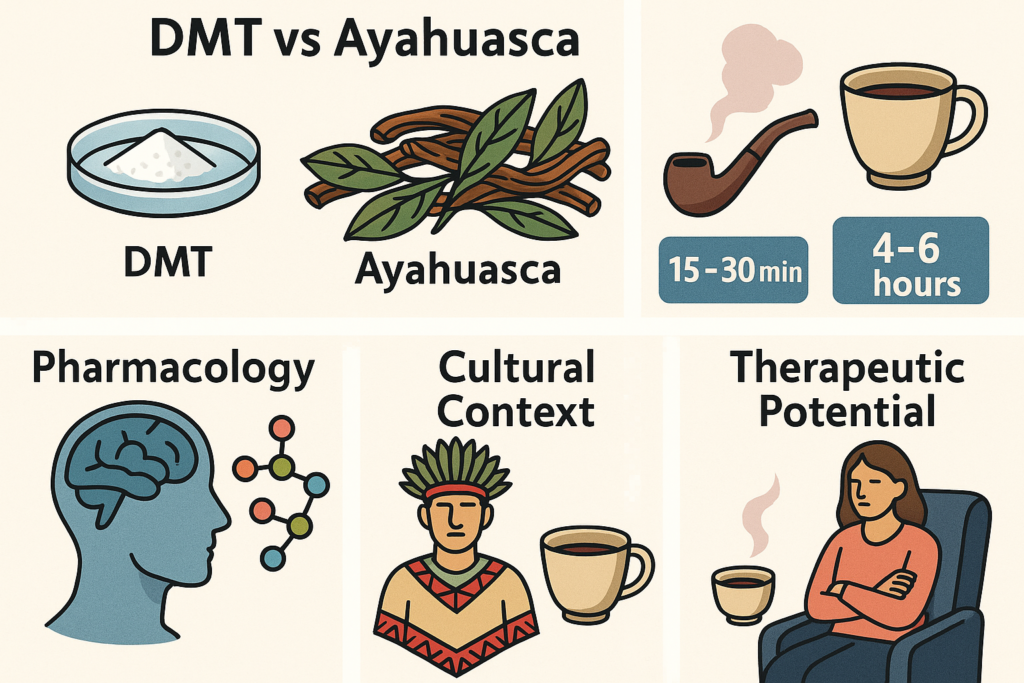
Because DMT by itself is inactive orally (it is rapidly broken down), people most often smoke or vaporize pure DMT. When smoked or injected, the effects come on almost instantly and are very brief – usually peaking in 2–5 minutes and fading by 30–45 minutes. Some users call this a “45-minute psychosis” because of the short, intense trip. By contrast, ayahuasca is drunk as a tea in a ritual ceremony. The drink’s effects begin more slowly (usually 20–60 minutes after ingestion), build to a peak around 1–2 hours, and can last 4–6 hours overall. In practice, people smoke DMT for a rapid, short-lived journey, whereas ayahuasca offers a longer, slower-onset experience. Importantly, the two feel quite different: pure DMT often produces a sudden “launch” into vivid hallucinations or alternate realities, while ayahuasca tends to produce a gradual build of visions, emotional insights, and sometimes physically purging (vomiting) as part of the experience.

DMT vs Ayahuasca. Pharmacology and Brain Effects.
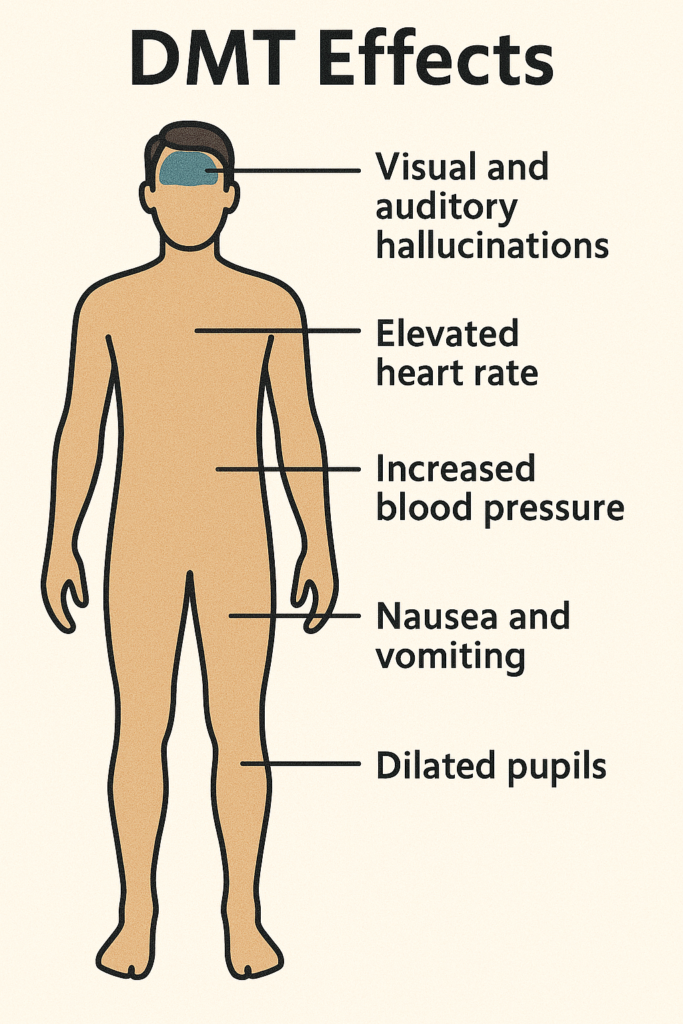
Both DMT and ayahuasca mainly alter brain function by acting on serotonin receptors. DMT is a serotonergic hallucinogen: it non‑selectively stimulates many serotonin (5‑HT) receptors, especially the 5‑HT2A subtype. This is the same receptor involved in classic psychedelics like LSD or psilocybin. The result is intense sensory and cognitive distortions. In the brain, DMT induces powerful visual and auditory hallucinations, a distorted sense of time and self, and feelings of ego-dissolution. Physiologically, DMT can raise heart rate and blood pressure and may cause agitation or dizziness.
Ayahuasca’s pharmacology is more complex because it contains two main active components: DMT and β-carboline alkaloids (harmine, harmaline, etc.) from the vine. The β-carbolines act as MAO inhibitors that allow DMT to survive digestion. They also have psychoactive effects of their own, which can add mild stimulating or dreaming effects. Researchers note that ayahuasca’s compounds bind not only to serotonin receptors but also to other brain systems (including sigma-1 receptors and dopaminergic systems) and can even influence brain plasticity signals like BDNF. In other words, ayahuasca’s ritual brew may produce a broader neurochemical effect than smoked DMT alone. Laboratory studies suggest that harmine (from B. caapi) has neuroprotective and neurogenic effects in the brain. Overall, the combination of DMT and MAOIs in ayahuasca leads to a qualitatively different journey: a longer-lasting vision experience often mixed with introspection and somatic sensations (like nausea), versus the pure DMT peak-trip of alternate-worlds encounters.
DMT vs Ayahuasca. Consumption and Duration.
– DMT is usually smoked or vaporized (or sometimes injected), so its effects begin within seconds and last only about 15–30 minutes.
– Ayahuasca is drunk as a tea, so its effects start in tens of minutes and can continue for 4–6 hours.
– Pure DMT is typically a single-ingredient substance, whereas ayahuasca is a multi-ingredient herbal brew (with additional plants/alkaloids).
– Because of these factors, DMT trips are more intense and brief, while ayahuasca journeys are longer, gentler in onset, and often include ritual context and physical purging.
| Aspect | DMT | Ayahuasca |
|---|---|---|
| Primary Compound | N,N-Dimethyltryptamine, a tryptamine alkaloid. | DMT (from Psychotria viridis) plus β-carboline alkaloids (harmine, harmaline). |
| Source | Synthetic or extracted from plants like Psychotria viridis. | Brew from Banisteriopsis caapi vine and DMT-containing plants. |
| Preparation | Used as a pure compound, often a white crystalline powder. | Boiled over days in a ritualistic process, resulting in a brownish-red liquid. |
Cultural and Historical Context
Ayahuasca has a long history in Amazonian indigenous cultures. Its name comes from Quechua, meaning “vine of souls” or “vine of the dead,” and it has been used for centuries (likely millennia) by Amazonian shamans for healing, divination, and community rituals. Traditional ceremonies involve a shaman and often include chanting, and the purging (vomiting or diarrhea) is viewed as cleansing. In the late 20th century, ayahuasca use spread into syncretic religious churches in Brazil (most notably Santo Daime and União do Vegetal), which blended Christian and indigenous traditions. These churches have since established international branches, and many Westerners now travel to South America to participate in ayahuasca retreats. In fact, legal protections for religious use have arisen: for example, in the United States the Supreme Court ruled that the União do Vegetal church has the right to serve ayahuasca to its members under the Religious Freedom Restoration Act.
Pure DMT (outside of ayahuasca) was first synthesized in the 1930s, but indigenous Amazonian peoples have also historically used DMT-rich plants (such as Desmodium snuffs or Virola snuffs) for ritual purposes. In modern times, DMT emerged as a recreational and research substance in the 1960s and is often called the “spirit molecule” due to its intense mystical effects. It gained cult attention in part through Rick Strassman’s clinical studies in the 1990s and popular books. Today, DMT is used both in underground psychedelic communities and by some researchers exploring psychedelic therapy.
Legal Status by Region
United States: DMT is classified as a Schedule I controlled substance (no accepted medical use) under U.S. law. Possession or distribution of DMT is illegal. Ayahuasca is technically illegal in the U.S. as well, since it contains DMT. However, U.S. courts have granted specific religious exemptions: the Santo Daime and UDV churches are allowed to import and consume ayahuasca for their ceremonies. In practice, casual or commercial use of ayahuasca outside these protections is unlawful.
Europe: In most European countries, DMT is banned (often in the highest illegal category) and ayahuasca is likewise prohibited. For example, the Netherlands once tolerated ayahuasca for decades, but in 2018 the Dutch Supreme Court ruled that ayahuasca falls under the Opium Act ban on DMT. Other nations like the UK explicitly list DMT as a Class A drug, making ayahuasca illegal by association. There is some variation (some countries may not actively police personal use of traditional teas), but generally both substances are highly restricted in Europe.
South America: The picture is different. In Brazil, the spiritual use of ayahuasca has been legal since the 1980s. Brazil’s health agency and courts have recognized that traditional churches may use the brew, and it is not prosecuted as a recreational drug. Similarly, Peru and Colombia recognize indigenous rights to use ayahuasca, and it is widely offered in retreat centers there. In short, ayahuasca is generally legal or tolerated in many South American countries for religious or traditional use, even though pure DMT remains controlled.
DMT vs Ayahuasca. Common Experiences.
Both DMT and ayahuasca produce strong visual and emotional effects, but users often describe them differently. Pure DMT trips are noted for instantaneous, extremely vivid hallucinations and often a total loss of the normal sense of self. Many users report “visiting other worlds,” encountering geometric patterns or entities (the so-called “machine elves”), and feeling disconnected from their body. Because the onset is so fast, people frequently describe it as “being blasted” out of normal consciousness. The experience is generally intense but passes quickly.

Ayahuasca experiences tend to be more gradual and introspective. Users describe strong visual imagery and emotional insights, often tied to personal issues. The ceremonies often focus on spiritual healing, so participants may process grief or trauma during the journey. It is also common for ayahuasca drinkers to experience physical purging: intense nausea, vomiting, or diarrhea. This is considered a normal “cleaning” part of the experience in traditional contexts. Emotionally, ayahuasca can bring about feelings of euphoria and connectedness, but it can also provoke anxiety or fear as difficult material comes up.
Therapeutic Interest
In recent years, scientists have begun studying both substances for potential mental health benefits. Small clinical studies and surveys suggest that ayahuasca ceremonies can produce lasting improvements in mood, anxiety, and addiction. For example, one study found significant reductions in depression and stress following an ayahuasca session, with benefits lasting weeks. Another small trial reported that participants in an ayahuasca-assisted retreat had sustained decreases in alcohol, tobacco, and cocaine use after six months. These findings are preliminary, but they echo longstanding claims by traditional users that ayahuasca helps heal emotional wounds.
Pure DMT has been less studied therapeutically, partly due to its short duration. However, some researchers are exploring DMT or DMT-like compounds (in the form of nasal sprays or infusions) for conditions like depression. The idea is that a brief but profound experience might help “reset” the brain in some way. DMT can produce effects “like a near-death experience,” which may have psychological significance. Overall, both DMT and ayahuasca are of high interest in the new wave of psychedelic research, but more controlled trials are needed.
Risks and Side Effects
Despite these potential benefits, there are important risks. Both DMT vs Ayahuasca are physiologically active: they raise heart rate and blood pressure and can cause agitation or panic during the experience. Very rarely, high doses or pure DMT have been linked to seizures or respiratory depression. The combination of psychedelics with certain medications is especially dangerous: for example, because ayahuasca contains MAOIs and DMT is serotonergic, mixing ayahuasca with antidepressants (SSRIs, SNRIs, TCAs) or other serotonin-boosting drugs can lead to life-threatening serotonin syndrome.
Psychologically, both substances can trigger intense and sometimes frightening experiences. A small minority of users report lasting changes in anxiety or psychosis after unsupervised use. Because of the profound ego-dissolution they cause, people with a personal or family history of psychotic disorders are generally advised against using these psychedelics. It’s also worth noting that the physical vomiting and diarrhea of ayahuasca can be very uncomfortable and require medical supervision if severe. Traditional practitioners view the purge as cleansing, but it can be a risk for people with weak heart or other health issues.
Conclusion
In summary, DMT vs Ayahuasca are closely related but distinct. DMT is the pure molecule that gives the intense but brief “breakthrough” trip, while ayahuasca is a specially prepared tea that allows DMT to be taken orally for a longer, ritualized journey. Their pharmacological mechanisms overlap (serotonin receptor agonism), but the context, duration, and subjective feel of their effects differ markedly. Both have traditional and modern cultural significance and are being researched for mental health uses, yet both carry significant legal restrictions and physical/psychological risks. Anyone interested in these substances should approach with caution, respect for tradition, and awareness of the legal and health implications.
Sources
- Strassman, R. (2001). DMT: The Spirit Molecule. Park Street Press.
- Luna, L. E. (2011). Indigenous and mestizo use of Ayahuasca. In Ayahuasca, Ritual and Religion in Brazil. Equinox Publishing.
- McKenna, D. J. (2004). Clinical investigations of the therapeutic potential of ayahuasca. Journal of Psychoactive Drugs, 36(1), 111-117.
- Alcohol and Drug Foundation. (2025). DMT. https://adf.org.au/drug-facts/dmt/
- Alcohol and Drug Foundation. (2025). Ayahuasca. https://adf.org.au/drug-facts/ayahuasca/
- Callaway, J. C., & Grob, C. S. (1998). Ayahuasca preparations and serotonin reuptake inhibitors. Journal of Psychoactive Drugs, 30(4), 367-369.
- Barker, S. A. (2018). N,N-Dimethyltryptamine (DMT), an endogenous hallucinogen. Frontiers in Neuroscience, 12, 536.
- Morales-Garcia, J. A., et al. (2020). N,N-dimethyltryptamine compound found in the hallucinogenic tea ayahuasca, regulates adult neurogenesis in vitro and in vivo. Translational Psychiatry, 10, 331. https://www.nature.com/articles/s41398-020-01011-0
- Small Pharma. (2023). Major study on DMT shows promise for depression. European Pharmaceutical Review. https://www.europeanpharmaceuticalreview.com/news/178880/major-study-on-dmt-shows-promise-for-depression/
- Palhano-Fontes, F., et al. (2019). Rapid antidepressant effects of the psychedelic ayahuasca in treatment-resistant depression. Psychological Medicine, 49(4), 655-663. https://www.cambridge.org/core/journals/psychological-medicine/article/rapid-antidepressant-effects-of-the-psychedelic-ayahuasca-in-treatmentresistant-depression-a-randomized-placebocontrolled-trial/E67A8A4BBE4F5F14DE8552DB9A0CBC97
- Bouso, J. C., et al. (2022). Adverse effects of ayahuasca: Results from the Global Ayahuasca Survey. PLOS Global Public Health, 2(11), e0000438.
- Ona, G., et al. (2024). Ayahuasca and Dimethyltryptamine Adverse Events and Toxicity Analysis. PMC. https://pmc.ncbi.nlm.nih.gov/articles/PMC11088222/
- Gable, R. S. (2007). Risk assessment of ritual use of oral DMT. Addiction, 102(1), 24-34.
- Labate, B. C., & Feeney, K. (2012). Ayahuasca and the process of regulation in Brazil. International Journal of Drug Policy, 23(2), 154-161.
- Tupper, K. W. (2008). The globalization of ayahuasca: Harm reduction or benefit maximization? International Journal of Drug Policy, 19(4), 297-303.
- Australian ayahuasca recipe https://bbgate.com/en/threads/australian-ayahuasca-recipe.738/