

Weed and Hash Compared: Potency, Health Impact, and Medical Use
Abstract
In this article, we’ll break down the major differences between Hashish vs Weed, examine how each affects overall health, and discuss what these differences mean in terms of addiction risk and recovery paths.
Cannabis remains one of the most commonly consumed psychoactive substances around the world, yet it’s important to recognize that not all cannabis products are created equal. Two well-known forms— weed (often called marijuana) and hashish (commonly known as hash)—differ in various ways, including strength, usage methods, and psychological and physical effects.
Recognizing these distinctions matters not only for casual users but also for individuals facing substance-related challenges and exploring treatment possibilities.

What Is Hash and How Is It Different From Weed?
Weed and Hashish: Two Distinct Forms of Cannabis [1]
Cannabis comes in several different forms, with weed (also known as marijuana) and hash (short for hashish) being two of the most widely recognized. Though both are derived from the cannabis plant, they differ significantly in their composition, strength, and how they are used.
Weed is made from the dried flowers, leaves, and stems of the cannabis plant. Its psychoactive effects come primarily from THC (tetrahydrocannabinol), the compound responsible for the euphoric “high.” The THC concentration in weed generally falls between 10% and 25%, though certain strains can exceed this range. Weed is commonly consumed by smoking in joints, pipes, or bongs, as well as through vaping or edibles that contain cannabis extracts. It’s widely available in regions where cannabis use is legalized, although it remains prohibited under federal law in many countries.
Hash, on the other hand, is a concentrated product created by collecting and compressing the resinous trichomes of the cannabis plant. These resin glands are rich in cannabinoids and produce a much more potent substance than standard marijuana. Hash can appear sticky and pliable or dry and brittle, depending on how it’s processed. Its THC content is usually higher—ranging from 20% to as much as 60%—which gives it a more intense effect. Methods of consumption include smoking (often mixed with weed or tobacco), vaporizing, or dabbing with specialized tools designed for concentrates.
While both weed and hash deliver psychoactive effects, the differences in strength, preparation, and usage methods make each product unique. Understanding these distinctions is important not only for informed recreational use, but also for individuals dealing with cannabis dependency or exploring treatment options.
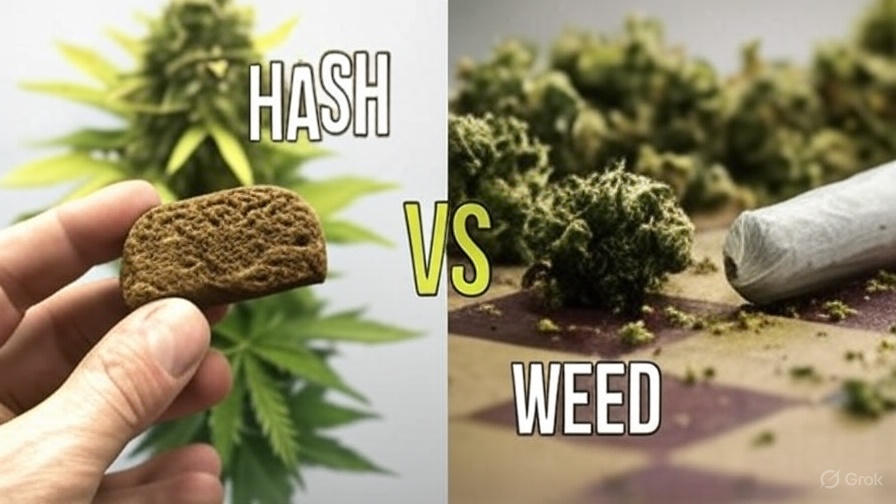
Figure 1 Hashish vs Weed
Hash vs. Weed: How Their Effects Differ [2]
While both hashish and weed originate from the cannabis plant, the experiences they produce can vary significantly. Smoking hash often leads to a more intense effect than smoking standard marijuana, largely due to its higher concentration of THC. That said, not all hash is created equal. Poorly made or adulterated hash may be mixed with substances like sand, henna, oils, plastic, or even animal byproducts, reducing its purity and safety.
Despite these differences, hashish and weed share many common effects. However, each also has its own unique qualities worth understanding—especially for users seeking specific outcomes or evaluating their personal tolerance.
Shared Effects of Hashish and Weed:
- A sense of euphoria and deep relaxation
- Distortion in time perception
- Increased hunger (commonly known as “the munchies”)
- Dry mouth and dry eyes
- Risk of anxiety or paranoia, particularly with high doses or in sensitive individuals
Effects More Common with Hashish:
- A more powerful and long-lasting psychoactive high
- Profound physical relaxation or sedation
- Heightened sensory awareness
- Boosted creativity and deeper self-reflection
- Effective relief from chronic pain and muscle spasms
Effects Typically Associated with Weed:
- A milder, more manageable high
- Enhanced sensory experiences (like music or food)
- Increased sociability and talkativeness in some users
- Help with managing pain and reducing inflammation
Figure 2 Weed. Hashish vs Weed
Health Effects, Risks and Medical Use of Hashish vs Weed [3-4]
Cannabis-derived substances like hashish and weed are widely used around the world, but their health impacts—both short- and long-term—are still being studied. Because weed concentrates, such as hash, contain significantly more THC (tetrahydrocannabinol) than dried cannabis flower, their effects are typically more intense.
The immediate effects of using hashish or weed can vary in intensity but generally include:
- Memory issues and trouble focusing
- Distorted perception of time, space, and senses
- Impaired motor coordination
- Elevated heart rate and blood pressure
- Anxiety or panic, especially with high THC doses
Since THC is stored in the body’s fat tissues, it can remain detectable for days—or even weeks—in frequent users.
Over the last few decades, THC levels in weed have increased dramatically. While typical THC content in the late 1990s averaged about 4%, studies by the DEA show that by 2018, many samples exceeded 15%. Hashish and other concentrates often contain THC levels between 20% and 60%, making them much stronger and potentially riskier.
Long-Term Health Concerns
Though long-term effects of hash use are still under investigation, the prolonged use of weed has been associated with:
- Psychological issues like paranoia, panic attacks, anxiety, and, in some cases, hallucinations
- Irregular heart rate and blood pressure
- Respiratory problems (daily coughing, chronic bronchitis, and increased lung infections), especially in those who smoke weed
- Cognitive challenges, including reduced attention span, learning difficulties, and memory problems
- Research also shows that starting weed use during adolescence may negatively impact brain development and IQ.
Historically, weed (THC) has been classified as a hallucinogen, although its effects are usually milder than substances like LSD or psilocybin. When hallucinations do occur from cannabis use, they tend to be brief and less vivid, suggesting a different mechanism than traditional hallucinogens.
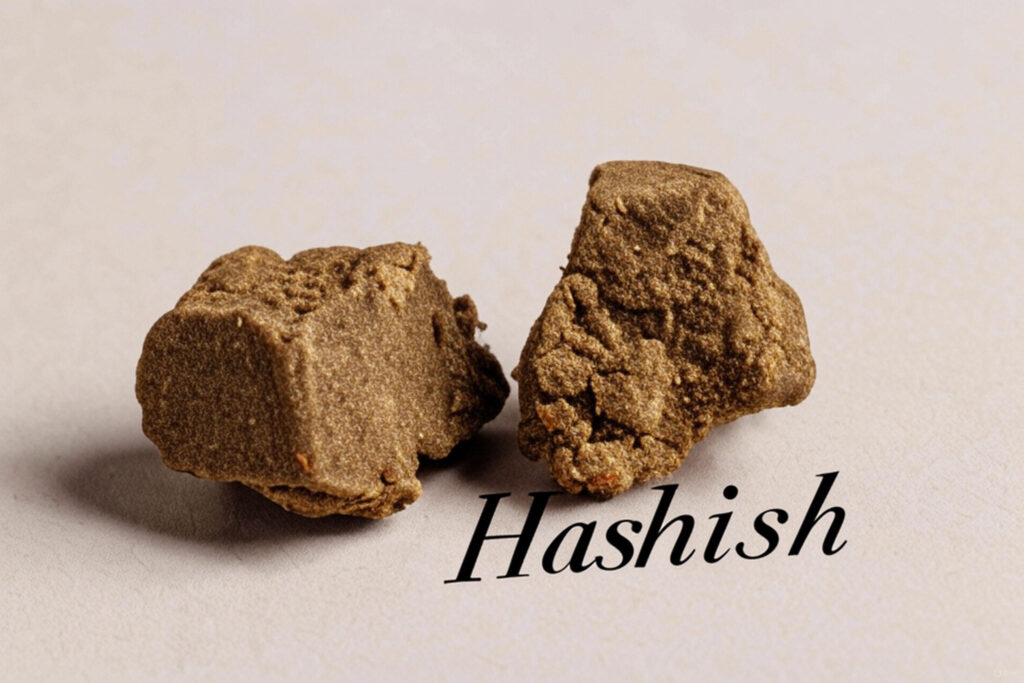
Figure 3 Hashish. Hashish vs Weed
What Is Medical Weed?
In several U.S. states, weed is legally available for medical use, mainly to relieve symptoms rather than treat underlying conditions. Common medical applications include:
- Chronic pain management, especially neuropathic pain
- Nausea relief for chemotherapy patients
- Muscle spasticity treatment in multiple sclerosis (MS)
- Appetite stimulation for individuals experiencing severe weight loss
Despite these uses, the FDA still classifies weed as a Schedule I substance, meaning it has no approved medical uses under federal law and carries a high risk of abuse. As a result, healthcare providers cannot prescribe weed, but in some states, they can certify its use under specific programs.
However, the FDA has approved a few marijuana-derived or related medications, including:
- Epidiolex® (cannabidiol) – prescribed for rare epilepsy types
- Marinol® (dronabinol) and Cesamet® (nabilone) – used for nausea and appetite loss associated with chemotherapy or HIV/AIDS
Benefits and Limitations
Although many individuals report personal benefits from weed, there’s still insufficient scientific evidence to confirm its widespread therapeutic value. Its effects can vary significantly between users, and long-term studies are limited, making broad medical conclusions difficult.
Beyond health-related issues, weed and hash use are associated with broader risks, such as:
- Higher risk of car accidents due to impaired motor function and reaction time
- Increased injury risk in older adults
- Contaminated cannabis products, which may include harmful pesticides, mold, or bacteria
- Labeling inaccuracies, where THC levels differ from what’s printed on packaging

What is the Difference Between Marijuana and Hash? Hashish vs Weed
Weed vs Hash Trip experience [13-14]
My First Real High
I had made plans to meet friends at a local restaurant to celebrate a birthday. After walking 4km there, I only ate some fries that my friend Ben kindly bought me. We stayed until around 7 PM when Ian suggested going for drinks. Being the youngest and still in high school, I was left out of the plan — until Eddie offered to share some weed.
I had smoked before, but always while drunk, and never felt much. This would be my first time trying it sober. Eventually, Eddie, Ian, and I drove to Mount Victoria, a hill overlooking the city. The lookout was crowded, so we drove further to a quiet back road near some creepy public toilets. After a short hike into the woods, we found a spot by a tree and set up.
Eddie brought a makeshift smoking device — a “squeegee” — and packed a few cones. Ian and I took turns, and surprisingly, I didn’t cough. At first, I wasn’t sure it worked — until everything started to shift. My mouth went numb, I felt euphoric, and a swirling sensation took over my body. My tongue kept circling my teeth like it had a mind of its own. It was weird but pleasant.
We hiked back to the car, and as the high deepened, reality felt like it was moving in slow motion. My mouth dried out, and I was intensely relaxed but aware that Ian — not the safest driver — was now behind the wheel. Despite my worries, we made it to the bar, dropped off Eddie, and Ian drove me home.
I snuck into my outdoor room without getting caught, though I saw my mum was still awake in the lounge. I locked my door and laid down, overwhelmed by how peaceful I felt. Hours later, I woke up to worried texts from my mum, who had stayed up waiting for me. I messaged her back, pretending I had just come home late and tired.
Overall, it was a strange, intense, but ultimately calming experience. The relaxed feeling lingered for days — something I hadn’t expected, but definitely remembered.
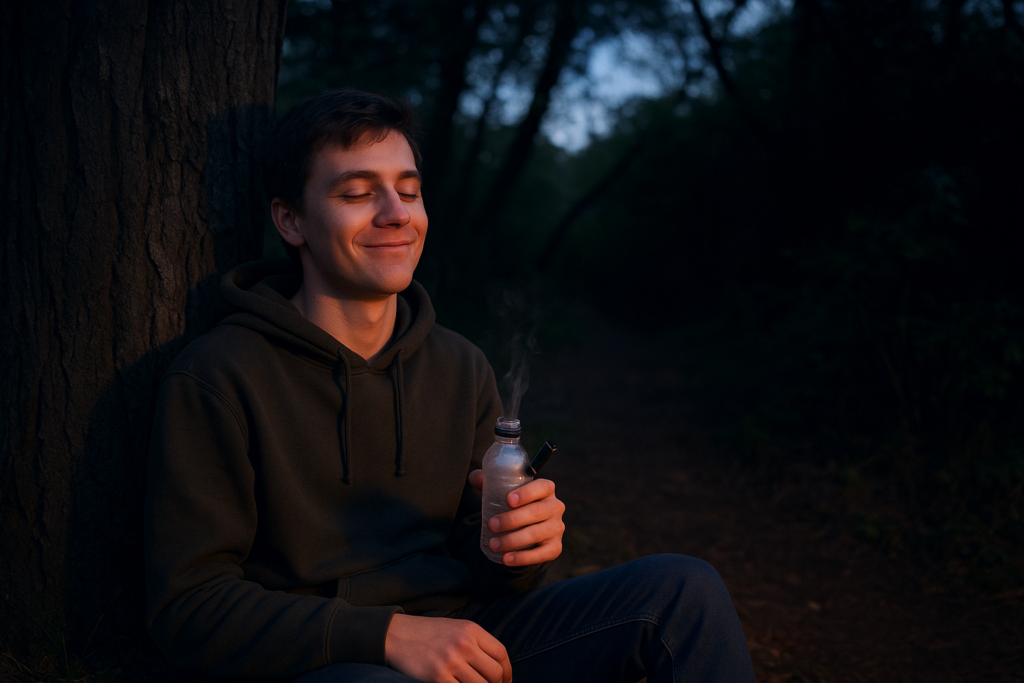
Figure 4 Real High. Hashish vs Weed
Hash Oil and a Playground Epiphany
Last week, during a late-night conversation with my friend (let’s call him B), the topic of hash oil came up. Though I’m not much of a drug user — a bit of weed here, some mild DXM there — I had been sober for three months. Still, something about trying hash oil intrigued me.
A week later, on an unseasonably warm October day, I picked up the oil from B. I had no proper setup, so I experimented with makeshift methods, including foil — which was a failure — before eventually soaking a small piece of toilet paper in the oil and smoking it in a pipe. It was rough. The smoke burned harshly, triggering my gag reflex with every hit. It took nearly 30 minutes to finish just one small bowl.
Once I was done, the effects crept in slowly. Unlike regular bud, this high was more physical than mental. I felt drawn outside, compelled by the beautiful weather, and soon found myself at a nearby playground.
As soon as I got on the swings, something shifted. Childlike joy surged through me. With the wind in my hair, I grinned uncontrollably, watching myself swing from a third-person perspective — pure bliss. I imagined the laughter of children, the playground alive with energy. Suddenly, I wasn’t just high; I was overwhelmed with gratitude.
Everything around me — the lights, the equipment, the trees — seemed imbued with love. I felt the intention and care of the workers who built it, the joy of the kids who played on it, and the compassion of nature itself. Trees, grass, weeds — it all felt like it existed to share love. I began to see this love as a spiritual force, perhaps even divine.
I reflected on god — not as a being, but as a presence, a compassionate energy. I remembered a moment in my life when a stranger’s small act of kindness felt like the most religious experience I’d ever had. At that moment, I felt like god was just… love.
Later, at home, I reached for an apple. As I ate it slowly, it felt like more than a snack — it was a gift from nature, a simple act of grace. I was humbled by the cycle that brought it to my table.
That night ended in quiet reflection, followed by a deep, peaceful sleep. The experience left a lasting mark on me — not one I’m likely to repeat, but one I’ll never forget. It wasn’t just a high. It was a moment of clarity.

The Beauty of Hashish vs Cannabis Flower. The Edge ft Dank Duchess. Hashish vs Weed
Conclusion
Hashish and marijuana, while derived from the same plant, differ greatly in strength and potential effects. Both can impact physical and mental health in the short and long term, with more research needed to fully understand the consequences of frequent or high-dose use. As cannabis laws and medical applications continue to evolve, informed and cautious use becomes more essential than ever.
Bibliography
- https://premiereaddictionrecovery.com/hash-vs-weed/
- https://louisvillerecoverycenter.com/2023/06/05/hashish-vs-weed-which-is-more-addictive/
- https://www.drugs.com/illicit/hashish.html
- https://my.clevelandclinic.org/health/articles/4392-marijuana-cannabis
- https://psychonautwiki.org/wiki/Cannabishttps://en.wikipedia.org/wiki/Hashish
- Ullah, R., & Ullah, H. (2025). The Social Web of Influence: Understanding the Contexts Driving Hashish Use Among Youth. Journal of Drug Issues, 0(0). https://doi.org/10.1177/00220426251324402 https://journals.sagepub.com/doi/10.1177/00220426251324402
- Ricci V, Di Muzio I, Ceci F, Di Carlo F, Mancusi G, Piro T, Paggi A, Pettorruso M, Vellante F, De Berardis D, Martinotti G and Maina G (2024) Aberrant salience in cannabis-induced psychosis: a comparative study. Front. Psychiatry. 14:1343884. doi: 10.3389/fpsyt.2023.1343884 https://www.frontiersin.org/journals/psychiatry/articles/10.3389/fpsyt.2023.1343884/full
- Chesney, E., Oliver, D., Sarma, A. et al. Does cannabidiol reduce the adverse effects of cannabis in schizophrenia? A randomised, double-blind, cross-over trial. Neuropsychopharmacol. (2025). https://doi.org/10.1038/s41386-025-02175-3 https://www.nature.com/articles/s41386-025-02175-3
- Samia Amin, Si Woo Chae, Crissy T Kawamoto, Kristina T Phillips, Pallav Pokhrel, Cannabis use among cancer patients and survivors in the United States: a systematic review, JNCI Cancer Spectrum, Volume 8, Issue 1, February 2024, pkae004, https://doi.org/10.1093/jncics/pkae004 https://academic.oup.com/jncics/article/8/1/pkae004/7593795
- Wolinsky D, Barrett FS, Vandrey R. The psychedelic effects of cannabis: A review of the literature. Journal of Psychopharmacology. 2023;38(1):49-55. doi:10.1177/02698811231209194 https://journals.sagepub.com/doi/full/10.1177/02698811231209194
- https://www.drugs.com/illicit/hashish.html
- https://www.drugs.com/npp/marijuana.html
- https://www.erowid.org/experiences/exp.php?ID=115067
- https://www.erowid.org/experiences/exp.php?ID=28021