

Introduction
Benzyl cyanide or phenyl acetonitrile (CAS № 140-29-4) is an organic aromatic nitrile with the formula C6H5CH2CN. It was first obtained by Stanislao Cannizzaro in 1855 by reacting potassium cyanide with benzyl chloride. It’s attracted the attention due to its properties and applications in various fields. One of the most important aspects of benzyl cyanide is its reactivity.
In addition, benzyl cyanide applications span a wide range of industries. From its role as an intermediate in the synthesis of pharmaceuticals (phenylethylamine, barbiturates, and opioids) and agrochemicals to its use in the perfume and fragrance industries, benzyl cyanide is found in many products that impact our daily lives.
Because benzyl cyanide is a useful precursor to various drugs that can be used recreationally, the compound is strictly regulated in many countries.
This article aims to provide a comprehensive overview of benzyl cyanide, covering its physical and chemical properties, exploring its diverse applications in various fields.
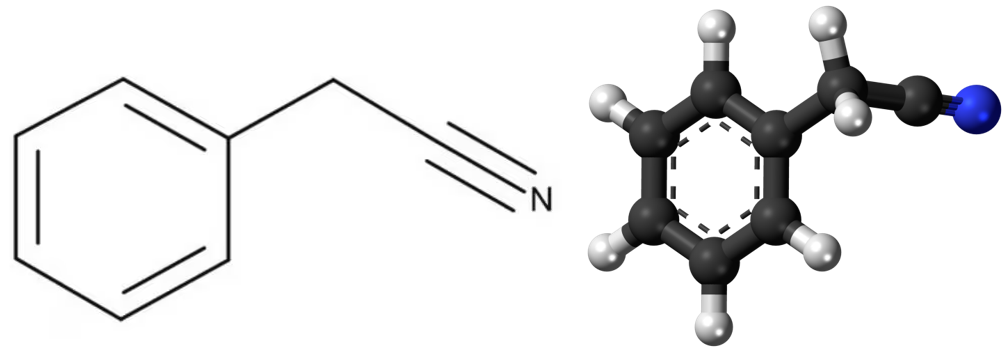
Physical and Chemical Properties of Benzyl Cyanide
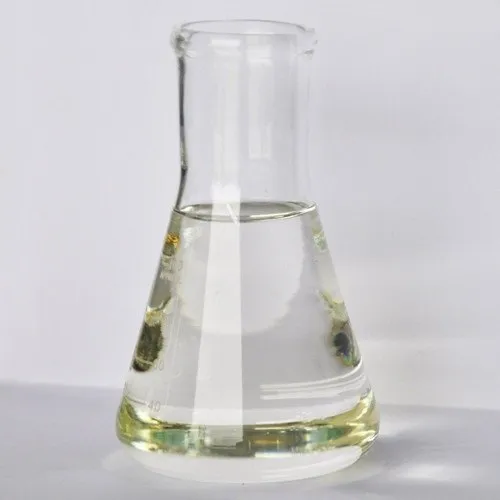
Benzyl cyanide, phenyl acetonitrile (CAS № 140-29-4), is an organic compound with the chemical formula C6H5CH2CN and a molecular weight 117.5 g/mol. This is colorless or yellow oily liquid, with a characteristic almond-like odor. Its density is 1.015 g/cm3. It is insoluble in water (0.1g/L at 25°C) and soluble in organic solvents, such as acetone, diethyl ether, ethanol, and tetrahydrofuran. Benzyl cyanide is flammable, with flash point 106°C, and boiling point of about 233°C. Melting point of benzyl cyanide is -23.8°C.
The chemical properties of benzyl cyanide are provided by the benzene ring and cyanide group. The cyanide group confers nucleophilic reactivity, allowing benzyl cyanide to participate in nucleophilic substitution reactions with alkyl halides and acyl chlorides. Reduction of the cyanide group can lead to the formation of primary amines or other products, making benzyl cyanide a precursor in organic synthesis.
![[ChemPlayer Reupload]Preparation of crude benzyl cyanide from benzyl chloride](https://i.ytimg.com/vi/APoGdkhGHt8/maxresdefault.jpg)
Synthesis of Benzyl Cyanide
Benzyl cyanide can be synthesized by various methods.
Amide Dehydration
Amide upon reaction with dehydration agent like phosphorus(V) oxide, gives the corresponding cyanide. For example, heating 2-phenylacetamide and phosphorus(V) oxide gives benzyl cyanide.

Kolbe Nitrile Synthesis
Another common method involves nucleophilic substitution of benzyl halides such as benzyl chloride with alkali metal cyanides. This method is based on the reaction of benzyl halide with cyanide ion obtained from alkali metal cyanide. For example, benzyl chloride reacts with sodium cyanide in a polar solvent to form benzyl cyanide. This method is suitable for a variety of substituted benzyl halides.
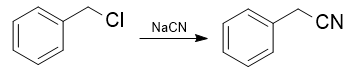
In conclusion, the synthesis of benzyl cyanide offers several versatile routes that cater to different availability and reaction conditions.
Chemical Reactions of Benzyl Cyanide
Benzyl cyanide, due to its molecular structure and functional groups, is involved in chemical reactions leading to the formation of various products.
1. Hydrolysis Reactions
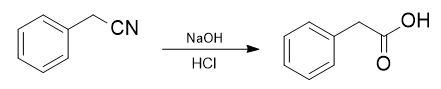
Benzyl cyanide hydrolyzes under acidic or basic conditions to form benzylamine and the corresponding carboxylic acid. Acid-catalyzed hydrolysis typically involves protonation of the cyanide group. Alkaline hydrolysis occurs due to the attack of hydroxide ions on the cyan group, which leads to the formation of benzylamine and the corresponding carboxylate salt. For example, heating benzyl cyanide with potassium hydroxide gives phenylacetic acid.
2. Reduction Reactions
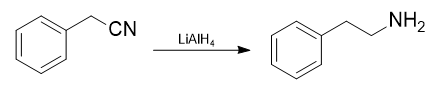
Benzyl cyanide can be reduced to benzylamine. Reduction of the cyanide group is usually achieved using reducing agents such as lithium aluminum hydride under appropriate reaction conditions. For example, benzyl cyanide when reduced with lithium aluminum hydride gives phenylacetic acid.
3. Hydrogenation of Benzyl Cyanide
When benzyl cyanide is hydrogenated with a nickel catalyst, the cyanide group becomes an amino group. For example, heating benzyl cyanide with a nickel catalyst in the presence of hydrogen produces 2-phenylethylamine.

Chemical reactions of benzaldehyde, which highlight its versatility as an intermediate in organic synthesis and applications in various fields of chemistry and industry.
Applications of Benzyl Cyanide
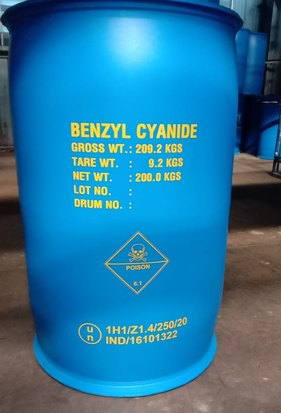
Benzyl cyanide is an important compound with many applications in various industries.
- 1. Pharmaceutical synthesis: Benzyl cyanide serves as an intermediate block in pharmaceutical synthesis, promoting the creation of biologically active compounds. For example, in the synthesis of phenethylamines, benzyl cyanide acts as a precursor. Through reduction reactions, benzyl cyanide is converted to primary aromatic amines, intermediates in the production of various pharmaceuticals aimed at neurological disorders, mood regulation and pain relief.
- 2. Agrochemicals: In the agrochemical industry, benzyl cyanide is widely used in the synthesis of pesticides, herbicides, and insecticides.
- 3. Flavors and flavoring additives: Benzyl cyanide is an intermediate ingredient in the perfume industry and contributes to the creation of distinctive aromas and tastes. Its characteristic almond scent serves as a base note in perfumes, cosmetics, and personal care products.
- 4. Synthesis of polymers: In polymer synthesis, benzyl cyanide plays an important role in the production of special polymers and copolymers with desired properties. By polymerizing benzyl cyanide, manufacturers can create polymers with increased thermal stability, and chemical resistance. Copolymerization with other monomers expands the range of applications, offering customized materials for coatings, adhesives, and engineering plastics.
Health Effects of Benzyl Cyanide
Benzyl cyanide can pose a health hazard under certain exposure conditions.
- 1. Toxicity: Benzyl cyanide is considered toxic and may be harmful if inhaled, swallowed, or absorbed through the skin. Exposure to high concentrations of benzyl cyanide can lead to adverse health effects, including respiratory irritation, nausea, headache, dizziness and, in severe cases, central nervous system depression.
- 2. Irritation: Benzyl cyanide may cause irritation to skin, eyes, and mucous membranes through direct contact. Contact of benzyl cyanide with skin may cause redness, itching, or dermatitis, and contact with eyes may cause irritation, redness, and watery eyes. Inhaling benzyl cyanide vapor can irritate the airways, resulting in coughing, chest discomfort, and difficulty breathing.
- 3. Chronic effects: Long-term exposure to benzyl cyanide is associated with chronic health effects. Chronic exposure may potentially contribute to respiratory problems, neurological disorders, and organ toxicity.
Safety Precautions
Safety precautions are important when handling benzyl cyanide due to its toxicity and potential health hazards. Here are some recommended safety precautions:
- 1. Personal protective equipment (PPE): Wear appropriate personal protective equipment, including gloves, safety goggles or face shield, lab coat or protective clothing, and respiratory protection.
- 2. Ventilation: Work in a ventilated area, such as a fume hood, to minimize inhalation of benzyl cyanide fumes.
- 3. Storage: Handle benzyl cyanide with care and avoid creating aerosols or splashes. Store benzyl cyanide in tightly closed containers in a cool, dry, well-ventilated area away from incompatible materials, heat sources, and direct sunlight.
- 4. Avoiding skin contact: Avoid direct contact of benzyl cyanide with skin. In case of skin contact, immediately wash affected areas with ethanol and remove contaminated clothing.
Conclusion
In conclusion, benzyl cyanide is a compound of significant interest in various industries. Its reactivity, chemical properties and diverse applications highlight its role in organic synthesis, pharmaceuticals, agrochemistry, perfumery and polymers.
However, it is important to be aware of the potential health hazards associated with benzyl cyanide exposure and take appropriate precautions and protocols to effectively reduce risks.
Bibliography
- Synthesis of Benzyl Cyanide from Benzyl Chloride
Url: https://bbgate.com/threads/synthesis-of-benzyl-cyanide-from-benzyl-chloride.204/ - Synthesis of Phenylacetic Acid From Benzyl Cyanide
Url: https://bbgate.com/threads/synthesis-of-phenylacetic-acid-from-benzyl-cyanide-large-scale.203/ - Synthesis of phenethylamines from phenylacetonitriles obtained by alkylation of cyanide ion with mannich bases from phenols and other benzylamines J.H. Short, D.A. Dunnigan, C.W. Ours Tetrahedron Volume 29, Issue 14, 1973, Pages 1931-1939
Url: https://doi.org/10.1016/0040-4020(73)80127-9 - Toxicity of benzyl cyanide in the rat Anne Guest, J.R. Jackson , Sybil P. James Toxicology Letters Volume 10, Issues 2–3, February 1982, Pages 265-272
Url: https://doi.org/10.1016/0378-4274(82)90086-8 - Some Michael Condensations Involving Benzyl Cyanide R. W. Helmkamp, Leo J. Tanghe, and John T. Plati J. Am. Chem. Soc. 1940, 62, 11, 3215–3219
Url: https://doi.org/10.1021/ja01868a091