

Dextroamphetamine: Therapeutic Use, Safety Warnings, and Personal Accounts
Abstract
While the exact mechanism of Dextroamphetamine effects & dosages in treating ADHD and narcolepsy is not entirely understood, it is believed to influence certain brain chemicals involved in focus, alertness, and impulse control.
Dextroamphetamine is part of a group of medications known as central nervous system (CNS) stimulants. Drug classes are categories of medications that produce similar effects and are often prescribed for related medical conditions.


Dextroamphetamine Uses, Dosage, Side Effects & Mechanism Dexedrine. Dextroamphetamine effects & dosages
Forms of Dextroamphetamine [1]
Dextroamphetamine is a medication commonly prescribed for managing attention-deficit hyperactivity disorder (ADHD) and narcolepsy, a condition that causes excessive daytime sleepiness. It is classified as a central nervous system (CNS) stimulant.
In treating ADHD, dextroamphetamine helps by enhancing focus and reducing hyperactivity and impulsivity in both children and adults. It is typically used as one component of a comprehensive treatment approach, which may also include behavioral therapy, educational support, and counseling.
This medication is available by prescription only and comes in several forms, including:
- Tablets
- Extended-release capsules
- Oral solution
Dextroamphetamine effects & dosages. Clinical Guidance [2]
Adult Dosage for Narcolepsy
Starting Dose: 10 mg orally per day. Adjustment: Increase by 10 mg weekly until optimal response is reached. Typical Range: 5–60 mg daily, divided across multiple doses. Immediate-Release (IR): Administer the first dose upon waking; additional doses may be given every 4–6 hours. Extended/Sustained-Release (ER/SR): Suitable for once-daily administration where appropriate. Indication: Management of narcolepsy.
Pediatric Dosage. For ADHD
Immediate-Release (IR): Ages 3–5 Years: Initial Dose: 2.5 mg orally once daily. Titration: Increase by 2.5 mg per week until desired effect. Ages 6–17 Years (IR and ER/SR): Initial Dose: 5 mg once or twice daily. Titration: Increase by 5 mg at weekly intervals as needed. Maximum: Typically does not exceed 40 mg/day.
Administration Notes: IR: First dose in the morning; 1–2 additional doses spaced 4–6 hours apart.
ER/SR: May be administered once daily. Periodic treatment interruptions are recommended to reassess the need for continued therapy. Indication: Part of a complete treatment plan for Attention-Deficit Hyperactivity Disorder (ADHD).
For Narcolepsy Ages 6–11 Years: Initial Dose: 5 mg per day. Titration: Increase by 5 mg weekly as needed.

Age 12 and Older: Initial Dose: 10 mg per day. Titration: Increase by 10 mg weekly.
Notes: Usual dosage range is 5–60 mg/day in divided doses. IR: Morning administration with optional 1–2 doses later. ER/SR: Once-daily dosing where suitable.
Narcolepsy is uncommon in children under 12 years of age. Special Populations Renal Impairment: No specific data available. Hepatic Impairment: No specific data available. Dose Modifications: Reduce dosage if adverse effects such as insomnia or loss of appetite occur.
Precautions Long-term safety in pediatric use remains unclear. Not recommended: IR: Children under 3 years (for ADHD). ER/SR: Children under 6 years (for ADHD). All forms: Children under 6 years (for narcolepsy). Refer to full safety and warnings information for more.
Drug Classification Controlled Substance: Schedule II (high potential for abuse or dependence).
Administration Advice. Avoid evening doses to minimize the risk of insomnia. Use the lowest effective dose, tailored to individual needs. Take oral tablets at consistent times daily, ideally with or just after meals.
General Considerations. Patient Response Varies: Some may show sensitivity at doses as low as 2 mg; while rare, severe effects may occur at typical doses.
Overdose Management: Primarily supportive care, including:
- Gastric lavage
- Activated charcoal
- Sedation
- No strong evidence supporting hemodialysis effectiveness
Monitoring Parameters System What to Monitor
- Cardiovascular Blood pressure, heart rate, circulation to extremities
- Growth Height, weight, appetite in children
- Psychiatric Mood, aggression, psychosis, suicidal thoughts
Abuse Risk Signs of misuse or dependency. Patient Guidance
- Avoid driving or operating machinery until you understand how the medication affects you.
- Contact your healthcare provider if you notice:
- Numbness, discoloration, pain, or temperature sensitivity in fingers or toes
- Unexplained sores or wounds on extremities

ADHD Medication: A Review of all Types & Side-Effects (2021 Edition). Dextroamphetamine effects & dosages
Dextroamphetamine: Side Effects and Safety Warnings [3]
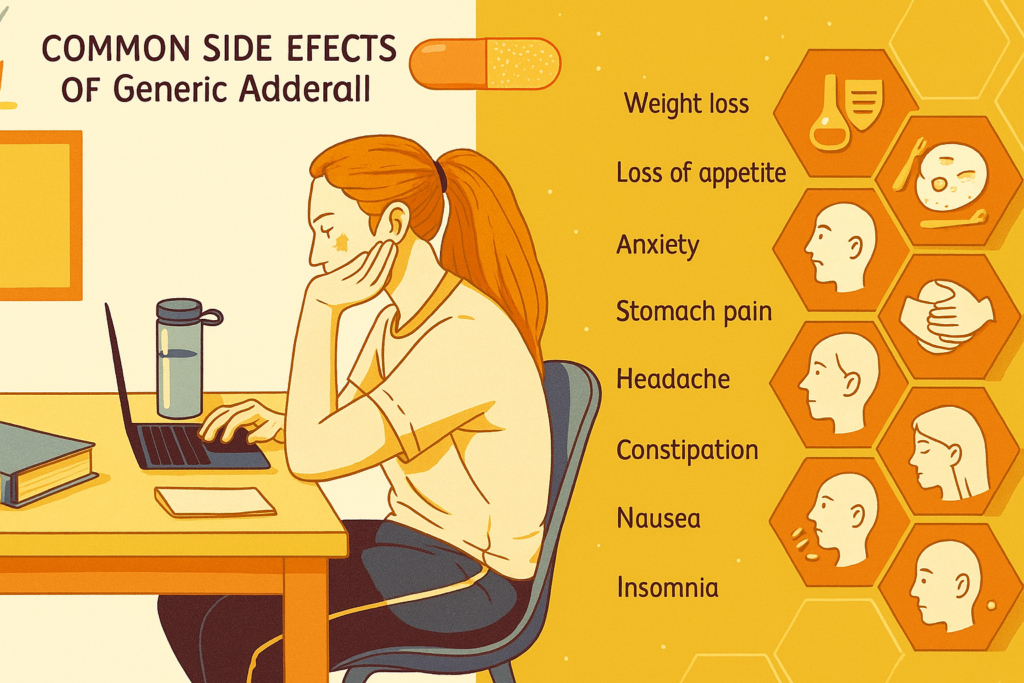
Common Side Effects
Dextroamphetamine does not typically cause drowsiness, but it can lead to other side effects. The most frequently reported ones include fast or irregular heartbeat, reduced appetite, muscle tremors, headaches, difficulty sleeping, dizziness, dry mouth, upset stomach, weight loss, and feelings of anxiety. These effects are usually mild and may go away within a few days or weeks. If they persist or worsen, contact your doctor or pharmacist.
Serious Side Effects
You should seek immediate medical attention if you experience any severe symptoms. These may include signs of an allergic reaction such as skin rash, itching, hives, swelling of the face, lips, or tongue, or difficulty breathing. Cardiovascular issues may present as chest pain or tightness, high blood pressure, fast or irregular heartbeat, or shortness of breath. Mental health effects might include confusion, hallucinations, and seizures, especially if you have a history of epilepsy. Visual problems can include blurred vision or other changes in eyesight. Circulatory symptoms may involve fingers or toes that feel numb, cold, painful, or show color changes. Movement disorders can involve muscle twitching, difficulty walking, dizziness, loss of coordination, or involuntary movements in the head, neck, mouth, arms, or legs. Other serious concerns include slowed growth in children and painful or prolonged erections.
Important Warnings
Allergic Reactions
This drug can trigger severe allergic responses. If you’ve had a past allergic reaction to dextroamphetamine, you must not take it again, as doing so could be life-threatening.
Food Interactions
Acidic juices such as orange or grapefruit juice can interfere with how your body absorbs dextroamphetamine by increasing acidity in your stomach and urine. This can make the drug less effective. You may be able to consume such juices one hour before or after taking your medication, but consult your doctor before making dietary changes.
Warnings for People with Certain Health Conditions
If you have heart problems, including high blood pressure, heart failure, irregular heartbeat, a history of heart attack or stroke, or a family history of these issues, this medication could worsen your condition. It may increase heart rate and blood pressure. Your doctor may evaluate your heart health before starting treatment. If you have a psychiatric condition such as bipolar disorder or psychosis, dextroamphetamine may aggravate your symptoms, and your mental state should be monitored during use. For individuals with a history of seizures, this drug may lower the seizure threshold, so inform your doctor if you have epilepsy. Those with overactive thyroid (hyperthyroidism) should avoid this medication, as it may increase the risk of serious heart issues. If you have glaucoma, dextroamphetamine may raise eye pressure and worsen the condition, so it should be avoided. People with a history of substance abuse should not take this drug due to its high potential for dependence and misuse.
Warnings for Specific Groups
Pregnant women should know that dextroamphetamine is classified as a Category C drug. This means that animal studies have shown possible risks to the fetus, and there are not enough human studies to confirm safety. It should only be used during pregnancy if the potential benefit justifies the risk. If you become pregnant while taking this drug, contact your doctor immediately.
Breastfeeding mothers are advised not to use this medication, as it passes into breast milk and may harm a nursing infant.
Children under the age of 3 should not take this medication for ADHD. In cases where narcolepsy occurs in children under 12, the drug may be used cautiously. If your child is prescribed dextroamphetamine, make sure an adult administers every dose.
If you are scheduled to undergo any procedure requiring sedation, such as an MRI or CT scan, you may need to temporarily stop taking this medication. Discuss this with your healthcare provider in advance.
A Personal Account of Using Dextroamphetamine [4-5]
Dextroamphetamine effects & dosages: A Paradoxical Reaction
My doctor first prescribed dextroamphetamine when I was 15, back in 1999. The idea was to help with my frequently irritable mood—and maybe even support some weight loss. However, my initial experience was far from what anyone expected. Within 15 minutes of taking the first dose, I felt overwhelmingly awful: extremely tired, nauseous, irritable, and just generally unwell. I ended up lying down on the kitchen floor, staring at the oriental rug, which for some reason appeared to flash green light. I remember thinking, “Yeah, I’m not into this.” Fortunately, the effects wore off within a few hours, and I didn’t touch the medication again for about a year.
Fast forward to the following year: I had just started some college classes and was once again motivated to lose weight. I gave the medication another shot, taking a dose in the morning. This time, the reaction was completely different. Rather than feeling miserable, I experienced a sensation oddly similar to what I had felt with hydrocodone—euphoric, relaxed, maybe a little too relaxed. The same happened with my afternoon dose, and again with both doses the next day. However, that pleasant effect disappeared quickly. After a few days, the medication no longer produced that noticeable feeling, though it continued to make me feel somewhat sedated on its own.
Interestingly, it has a strong synergistic effect when combined with caffeine. Alone, it doesn’t do much to suppress my appetite, despite being a well-known anorectic. On a few occasions, I’ve accidentally taken a double dose, forgetting I’d already taken one earlier. When that happens, it feels almost identical to hydrocodone again—something I find very inconvenient, especially when I have a busy morning ahead. I’ve never intentionally taken two pills at once, mostly out of concern over potential addiction and the fact that I don’t enjoy feeling that level of sedation.
I’ve stopped taking dextroamphetamine multiple times—mainly because I don’t like the idea of being dependent on pills. When I go off it, I personally feel okay, but the people around me seem to notice a big difference. Friends and family often complain that I’m noticeably grouchier without it, and eventually pressure me into resuming the medication.
I’ve always found it strange—maybe even a little absurd—that a stimulant as pharmacologically potent as dextroamphetamine has a sedating effect on me. But everyone reacts differently, so I don’t recommend using my experience as a reference point for what to expect.
Dexedrine and Me: A Cautionary Ride. Dextroamphetamine effects & dosages
A few months ago, I had the chance to try a full prescription of Dexedrine (dextroamphetamine sulfate, or d-amphetamine). I experimented with different methods of use—oral, intranasal, and even combined with alcohol—to better understand how the drug affected me in various contexts.
Taken Orally:

Figure 5 Usage. Dextroamphetamine
For me, a dose of around 10 to 15 mg seems to be the sweet spot. At that level, I experience a gentle euphoric lift, increased energy, heightened alertness, and a noticeable boost in self-confidence. If I go beyond that, the stimulating effects intensify, but they’re also accompanied by uncomfortable side effects—mainly nervous tension, shakiness, and irritability. So for everyday use, I find moderation is key.
Taken Nasally:
Snorting Dexedrine brings on the effects much more quickly—usually within five minutes. The result is similar to oral use but with a much sharper edge. I feel hyper-aware, almost to the point of discomfort. For me, this method tends to create a sense of over-alertness and borderline paranoia. Personally, I’d rather just take the pills; the smoother onset and more manageable high make oral administration the better option in my case.
Combined with Alcohol:
When mixed with alcohol, Dexedrine seems to blunt the depressant effects of drinking. I find myself able to consume more than usual while remaining unusually alert—what some might describe as a “wide-awake drunk.” It’s a strange combination, and not one I recommend casually.
Other Notes:
While I’m not a fan of snorting Dexedrine due to the edgy effects, I’ve had a much better experience doing the same with Ritalin (methylphenidate). I find Ritalin to be more euphoric and physically tolerable for me in that form—more details in my separate write-up on that.
Is Dexedrine the Solution to the Adderall Shortage? TheKicksShrink. Dextroamphetamine effects & dosages
Conclusion
Dextroamphetamine is a central nervous system stimulant commonly prescribed for ADHD and narcolepsy. It can improve focus, reduce impulsivity, and manage excessive daytime sleepiness, but it carries significant risks including cardiovascular issues, dependency, and psychiatric side effects. Dosage must be carefully individualized, with strict monitoring—especially in children. Personal accounts highlight that responses to the drug can vary widely, with both therapeutic and paradoxical effects reported. Safe use requires close medical supervision and awareness of potential interactions and contraindications.
Bibliography
- https://www.mayoclinic.org/drugs-supplements/dextroamphetamine-oral-route/description/drg-20071795
- https://www.drugs.com/dosage/dextroamphetamine.html
- https://www.healthline.com/health/drugs/dextroamphetamine-oral-tablet#other-warnings
- https://www.erowid.org/experiences/exp.php?ID=7461
- https://www.erowid.org/experiences/exp.php?ID=6348
- https://go.drugbank.com/drugs/DB01576
- https://psychonautwiki.org/wiki/Dextroamphetamine
- Abbas, K., Barnhardt, E. W., Nash, P. L., Streng, M., & Coury, D. L. (2024). A review of amphetamine extended release once-daily options for the management of attention-deficit hyperactivity disorder. Expert Review of Neurotherapeutics, 24 (4), 421–432. https://doi.org/10.1080/14737175.2024.2321921 https://www.tandfonline.com/doi/full/10.1080/14737175.2024.2321921
- https://bbgate.com/threads/dextroamphetamine.191/