
Solvents Recovery: A Comprehensive Guide to Reclaiming Solvents in Chemical Synthesis
Introduction
Solvents play a critical role in chemical processes, serving as vital media for reactions, extractions, and purifications. Their extensive use, however, often leads to considerable waste, posing both economic and environmental challenges. Solvents recovery provides an effective strategy by enabling the reclamation and reuse of these valuable materials. This approach reduces the demand for new solvent purchases, decreases waste disposal needs, and supports environmental sustainability while aiding compliance with regulatory requirements. In this article, we explore detailed recovery methods for six widely used solvents in chemical synthesis: isopropyl alcohol (IPA), dichloromethane (DCM), acetone, ortho-xylene, diethyl ether, and benzene. Each section delivers step-by-step techniques, practical advice, and safety considerations to ensure efficient and secure solvent recovery.
While achieving a 100% recovery rate is unrealistic due to losses from evaporation, impurities, and handling, reclaiming up to 90% of solvents is entirely feasible with the right techniques. This guide explores detailed methods for recovering six key solvents used in mephedrone synthesis: isopropyl alcohol (IPA), dichloromethane (DCM), acetone, ortho-xylene, diethyl ether, and benzene. Each section provides step-by-step processes, practical tips, and safety considerations to ensure effective recovery.
Solvents Recovery Methods
1. Isopropyl Alcohol (IPA) Solvents Recovery
Role in Synthesis: Isopropyl alcohol (IPA) is a go-to solvent for washing and purifying mephedrone crystals. Its moderate polarity allows it to dissolve impurities without affecting the product, though it often becomes diluted with water during these steps.

Recovery Process:
- Distillation (Optional): If the IPA is heavily contaminated with high-boiling impurities, distillation at its boiling point of 82.5°C can separate it from these residues. For most routine recoveries, however, simpler methods suffice, saving time and energy.
- Water Extraction:
- Step 1: Add 1 kg of anhydrous calcium chloride per 10 liters of IPA-water mixture. Calcium chloride is highly effective at absorbing water, forming a hydrate that can be filtered out.
- Step 2: Stir the mixture thoroughly to ensure even water absorption. A magnetic stirrer or manual stirring for 10-15 minutes works well.
- Step 3: Seal the container tightly and refrigerate it overnight (ideally at 4°C). The cold temperature enhances the efficiency of water removal by slowing molecular movement and aiding hydrate formation.
- Step 4: Filter out the solidified calcium chloride using a Buchner funnel or fine mesh. The last 5-10% of the liquid may appear cloudy due to suspended particles—decant the clear IPA carefully or use a paper filter for clarity.

Practical Tips:
- Small traces of other solvents (e.g., DCM or acetone) in the recovered IPA won’t compromise its effectiveness for subsequent purifications.
- IPA usage can reach 33 liters per 5 kg of mephedrone, making this recovery method a significant cost-saver.
- Avoid exposing the mixture to humid air during refrigeration, as moisture can recontaminate the IPA.
2. Dichloromethane (DCM) Solvents Recovery
Role in Synthesis: Dichloromethane (DCM) is widely used for extracting mephedrone from reaction mixtures. Its low boiling point (40°C) and strong solvency for organic compounds make it ideal for this purpose.

Challenges: DCM’s recovery is tricky due to its potential to oxidize into formaldehyde gas when distilled with water—a toxic and flammable byproduct that requires careful handling.
Recovery Process:
- Distillation:
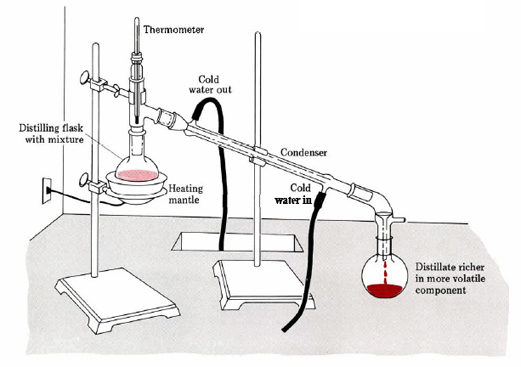
- Setup: Use a closed distillation system with a condenser and vent the exhaust into a fume hood to avoid formaldehyde exposure. DCM’s azeotrope with water boils at 38°C, slightly below its pure boiling point.
- Procedure: Add boiling chips to the flask to prevent superheating and explosive boiling. Distill until about 90% of the DCM is collected, leaving the final 10% (rich in impurities) behind for safe disposal.
- Safety: Wear a gas mask when handling the residue, as formaldehyde vapors can be present.
- Purification:
- Step 1: Mix the distilled DCM with an equal volume of distilled water in a separatory funnel.
- Step 2: Stir or shake gently, then let the layers separate. DCM, denser at 1.33 g/cm³, settles at the bottom—drain it off.
- Step 3: Repeat the washing process 2-3 times to remove traces of IPA and formaldehyde. Reuse the same water across batches to conserve resources.

Practical Tips:
- Recovered DCM may take on a slight gray or yellow tint, but this doesn’t affect its performance.
- Given DCM’s scarcity and cost, recovery is particularly worthwhile despite the extra safety precautions.
- Always work in a well-ventilated area to minimize inhalation risks.
3. Acetone Solvents Recovery
Role in Synthesis: Acetone is a popular choice for washing mephedrone crystals, effectively removing surface impurities. Its high water miscibility, however, complicates recovery efforts.

Recovery Process:
- Distillation:
- Distill acetone at 56.2°C to separate it from organic contaminants. Use a thermometer to monitor the process and stop at 75-80°C to avoid distilling impurities.
- Water Removal:
- Acetone’s affinity for water makes drying challenging. Advanced options include:
- Adding 5% by weight of anhydrous potassium carbonate or phosphorus pentoxide (P₂O₅) to absorb water, followed by reflux and redistillation.
- For practical purposes, acetone typically endures only 2-3 recovery cycles before quality degrades, making it less cost-effective to recover long-term.
- Acetone’s affinity for water makes drying challenging. Advanced options include:

Practical Tips:
- Minimize water contamination by thoroughly drying mephedrone before acetone washing, though this extends processing time.
- After a few cycles, reserve recovered acetone for non-critical tasks like cleaning equipment.
4. ortho-Xylene Solvents Recovery
Role in Synthesis: ortho-Xylene serves as a high-boiling, non-polar solvent in reactions, offering a less toxic alternative to benzene or toluene.

Recovery Process:
- Azeotropic Distillation:
- Step 1: Combine 2 parts ortho-xylene with 1 part distilled water in a flask equipped with a condenser.
- Step 2: Heat to boiling (azeotrope at 92°C), using boiling chips to control foaming. Collect the distillate in a separatory funnel.
- Step 3: Allow the layers to separate—discard the water layer and retain the ortho-xylene.
- Step 4: Wash the ortho-xylene with fresh water to remove residual impurities.
Practical Tips:
- Ortho-xylene’s low water solubility (0.014%) eliminates the need for additional drying steps.
- Its high boiling point (144°C) ensures stability during recovery, making it a reliable solvent to reclaim.
5. Diethyl Ether Solvents Recovery
Role in Synthesis: Diethyl ether’s low boiling point (34.6°C) and broad solvency make it ideal for extracting organic compounds in mephedrone synthesis.

Challenges: Its extreme flammability and tendency to form explosive peroxides when exposed to air and light demand rigorous safety measures.
Recovery Process:
- Peroxide Removal:
- Wash with 5% sodium hydroxide to neutralize acids, then dry with 150-200 g of anhydrous calcium chloride per liter for 24 hours.
- Filter and store in a dark bottle to limit peroxide formation.
- Distillation:
- Distill at 34.6°C over sodium wire (5 g/L initially, then 3 g/L after 24 hours) to remove moisture and peroxides. Add 1 g/L sodium wire to the stored ether as a preventative measure.

Practical Tips:
- Keep diethyl ether away from flames or sparks (minimum 1-meter distance) during handling.
- Regularly test for peroxides with strips and store in a cool, dark environment.
6. Benzene Solvents Recovery
Role in Synthesis: Benzene is a potent solvent for organic reactions but is highly toxic and carcinogenic, requiring careful handling.

Recovery Process:
- Water Removal:
- Use a Dean-Stark apparatus for azeotropic distillation (azeotrope at 69.25°C) to remove water.
- Dry with calcined calcium chloride for 2-3 days, then sodium wire.
- Impurity Removal:
- Shake with 80 ml of concentrated sulfuric acid per liter to extract thiophene until the acid stays pale yellow.
- Wash sequentially with water, 10% sodium carbonate, and water again.
- Distill, avoiding crystallization in the condenser (melting point 5.5°C).

Practical Tips:
- Use full PPE (gloves, respirator) due to benzene’s toxicity.
- Opt for safer alternatives like ortho-xylene when feasible.
Conclusion
Solvents Recovery transforms laboratory practices by slashing costs, reducing waste, and easing regulatory pressures. While mixed solvent recovery is complex, strategic synthesis planning—e.g., using DCM for extractions, IPA for purification, and acetone for washing—simplifies the process. Drying products between steps further boosts solvent purity. With these detailed techniques, laboratories can achieve sustainable, efficient, and safer operations.
Sources
- Smallwood, Ian McN. Solvent recovery handbook. CRC Press, 2002. https://books.google.pl/books?hl=ru&lr=&id=GcjME0wiMVsC&oi=fnd&pg=PA1&dq=Solvents+recovery&ots=2RVzYW61GU&sig=9fH8TlMsJQHpBULvV-NrcTZXKuY&redir_esc=y#v=onepage&q=Solvents%20recovery&f=false