

Cathinone vs Amphetamine: Comparing Potency, Mechanism, and Risks of Two Stimulants
Abstract
Cathinone vs Amphetamine highlights the key differences between two structurally related psychostimulants that impact the central nervous system. Amphetamine, a synthetic phenethylamine, and cathinone, a natural β-keto-phenethylamine found in khat leaves, differ in chemical structure, mechanism of action, potency, and associated risks. While both substances increase dopamine and norepinephrine levels to stimulate alertness, focus, and euphoria, amphetamine is generally more potent and has a longer duration of action, whereas cathinone produces milder effects but is more prone to acute cardiovascular reactions. Comprehension these differences is essential for assessing therapeutic use, recreational risks, and public health implications.
Cathinone vs Amphetamine: Understanding the Differences Between Two Stimulants [1-2]
Amphetamine and cathinone are both psychostimulants that affect the central nervous system, but they differ significantly in chemical structure, mechanism of action, potency, and associated risks. Amphetamine is a synthetic phenethylamine without additional functional groups, while cathinone is a β-keto-phenethylamine, meaning it has a ketone group at the β-carbon. This seemingly small structural difference profoundly influences their pharmacological properties, metabolism, and physiological effects. Amphetamine readily crosses the blood-brain barrier due to its high lipophilicity and primarily acts as a norepinephrine and dopamine releasing agent, increasing the availability of these neurotransmitters in the synaptic cleft. Cathinone also elevates monoamine levels, including dopamine, norepinephrine, and sometimes serotonin, functioning both as a releaser and as a reuptake inhibitor. However, many β-keto phenethylamines, including cathinone, have reduced activity at TAAR1 receptors, which makes them slightly less potent and alters their addictive potential compared with amphetamine.
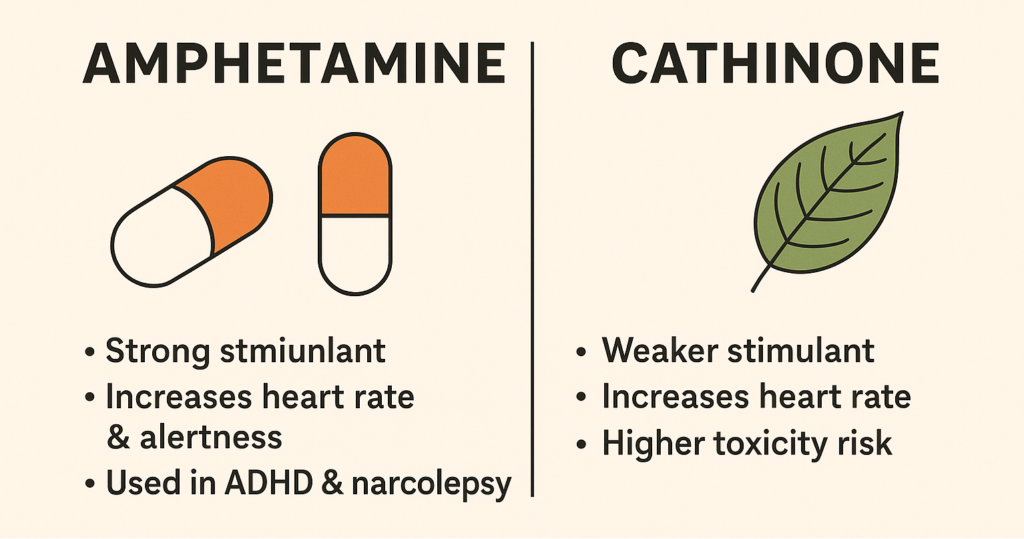
Figure 1 Cathinone vs Amphetamine
In terms of stimulant potency, amphetamine is generally stronger. Experimental studies, including animal models, suggest that cathinone is roughly two to four times less potent than d-amphetamine. This difference in potency translates into more pronounced psychostimulant effects, including euphoria, increased focus, and wakefulness, with amphetamine at lower doses compared to cathinone. While both substances can increase heart rate, blood pressure, and alertness, cathinone has been linked more frequently to acute toxic reactions such as tachycardia, hyperthermia, and, in severe cases, rhabdomyolysis. Amphetamine, though capable of producing psychological dependence and neurotoxicity with prolonged use, is generally more predictable under controlled medical settings, which is why it has approved applications in the treatment of ADHD and narcolepsy.
The origin and cultural use of these compounds also set them apart. Amphetamine is entirely synthetic and has been developed and modified over the past century for both medical and recreational use. Cathinone, in contrast, occurs naturally in the leaves of the khat plant, traditionally chewed in parts of East Africa and the Arabian Peninsula for its stimulating effects, mild euphoria, and appetite suppression. While cathinone can produce effects similar to amphetamine, including increased energy and sociability, its natural origin does not mitigate the risks; acute toxic effects are more common and sometimes more severe. Additionally, cathinone and its synthetic derivatives have varying potencies and unpredictable pharmacokinetics, which can make recreational use riskier than with medical-grade amphetamine.
Overall, amphetamine offers a more potent and controlled stimulant effect, with a well-studied pharmacological profile, predictable dosage effects, and established therapeutic applications. Cathinone, while chemically related, produces milder stimulation and euphoria, but carries a higher risk of acute cardiovascular and systemic toxicity. The differences in chemical structure, receptor activity, metabolism, and safety profile make amphetamine a stronger, more clinically manageable stimulant, whereas cathinone is weaker but potentially more hazardous when used outside controlled contexts. Both compounds illustrate how minor chemical modifications can significantly alter the effects, risks, and social implications of psychostimulant drugs.
Cathinone and Its Amphetamine-like Effects: Insights from Human and Animal Studies [3-4]
Cathinone, the primary active alkaloid in Catha edulis (khat), is a naturally occurring stimulant structurally related to amphetamine. It is primarily found in fresh young leaves, where its concentration ranges from 0.9 to 3.3%, varying according to geographic origin, with Kenyan khat generally containing the highest levels. Cathinone is chemically labile and degrades rapidly after harvesting, which explains why users prefer fresh leaves to achieve the characteristic psychoactive effects. Structurally, it shares a similar phenylalkylamine backbone with amphetamines, enabling it to exert central nervous system stimulant effects through mechanisms analogous to those of synthetic psychostimulants.
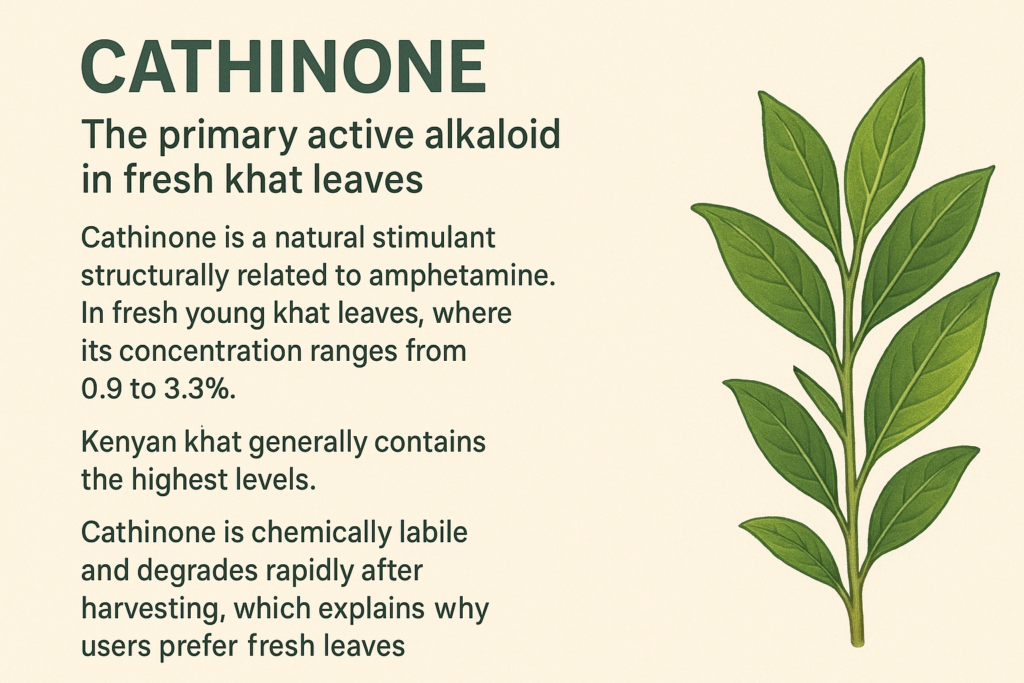
Figure 2 Cathinone
Experimental studies have demonstrated that cathinone increases levels of dopamine and, to a lesser extent, serotonin in the brain by acting on catecholaminergic synapses. In animal models, cathinone stimulates dopamine release in key brain regions such as the nucleus accumbens, striatum, and caudate nucleus, areas implicated in motivation, reward, and hyperlocomotion. Unlike amphetamine, cathinone has a higher affinity for serotonin receptors, suggesting that serotonergic pathways may play a relatively more prominent role in its effects. Behavioral studies in rats and monkeys have shown that cathinone induces hyperlocomotion, stereotypical behaviors, and drug-seeking behavior similar to amphetamines and cocaine, further supporting its psychostimulant properties.
Clinical research in humans confirms the central role of cathinone in khat’s effects. In controlled studies, ingestion of fresh khat leaves or isolated cathinone produced significant psychostimulant and euphorogenic responses, accompanied by increased heart rate and blood pressure. Plasma concentrations of cathinone peak approximately two hours after ingestion, with a half-life of about 1.5 hours, coinciding with observable physiological and psychological effects. Although other alkaloids in khat, such as cathine, contribute to peripheral sympathomimetic responses, cathinone is primarily responsible for central nervous system stimulation. Its greater lipophilicity compared to cathine facilitates penetration into the brain, enhancing its psychoactive potency.

Cathinone: What You Need To Know
Cathinone has been shown to maintain conditioned place preference in laboratory animals, indicating that it possesses rewarding and reinforcing properties mediated through dopaminergic activation. This reward system involvement explains the strong psychological dependence observed in habitual users, even though withdrawal symptoms such as lethargy, mild depression, and tremor are generally mild and short-lived. The parallels between cathinone and amphetamine in terms of neurochemical effects, behavioral responses, and addiction potential make it a substance of significant pharmacological and toxicological interest.
Legally, cathinone is classified as a Schedule I substance in the United States and is listed under Schedule I of the United Nations Convention on Psychotropic Substances, reflecting its high potential for abuse and limited medical application. Derivatives of cathinone, such as methcathinone, have emerged as potent synthetic stimulants, producing effects similar to methamphetamine and crack cocaine, often associated with severe neurotoxicity and long-term neurological deficits. Despite extensive acute research, long-term studies on cathinone’s neurotoxic potential, chronic cardiovascular effects, and cognitive impacts in humans remain limited. Understanding the pharmacodynamics, metabolism, and behavioral consequences of cathinone is therefore essential for evaluating both the therapeutic potential of related compounds and the public health implications of khat use.
In conclusion, cathinone is a potent natural psychostimulant responsible for the majority of the central nervous system effects observed following khat consumption. Its amphetamine-like mechanism, primarily involving dopaminergic and serotonergic modulation, underlies its stimulatory, euphoric, and reinforcing properties. While peripheral effects are partly shared with other khat alkaloids, cathinone’s central activity and potential for psychological dependence make it the principal bioactive constituent warranting focused scientific and regulatory attention.
Amphetamine: Mechanisms, Medical Applications, and Public Health Implications [5-6]
Amphetamine is a central nervous system (CNS) stimulant and sympathomimetic agent primarily indicated for the treatment of Attention Deficit Hyperactivity Disorder (ADHD) and narcolepsy. Chemically known as 1-phenylpropan-2-amine (C₉H₁₃N), amphetamine exists as two chiral isomers: dextro- and levo-amphetamine, with the d-isomer being more potent in stimulating dopamine release. First synthesized in 1927 and introduced therapeutically in the 1930s, amphetamine has been widely used for various conditions, though its use is now highly regulated due to abuse potential. During World War II, it was administered to soldiers to promote wakefulness, contributing to the rise of illicit use post-war.
Pharmacodynamically, amphetamine increases extracellular levels of monoamine neurotransmitters, including dopamine and norepinephrine, by entering presynaptic terminals via monoamine transporters, displacing neurotransmitters from vesicles via VMAT2, and promoting their release into the synapse. It also weakly inhibits reuptake of dopamine, moderately inhibits norepinephrine reuptake, and minimally affects serotonin. The l-isomer is less potent, while both isomers collectively contribute to the therapeutic effects. Amphetamine also exerts mild inhibition of monoamine oxidase (MAO), further augmenting neurotransmitter levels. These actions enhance prefrontal cortex function, improve attention, and reduce hyperactivity and impulsivity in ADHD patients.
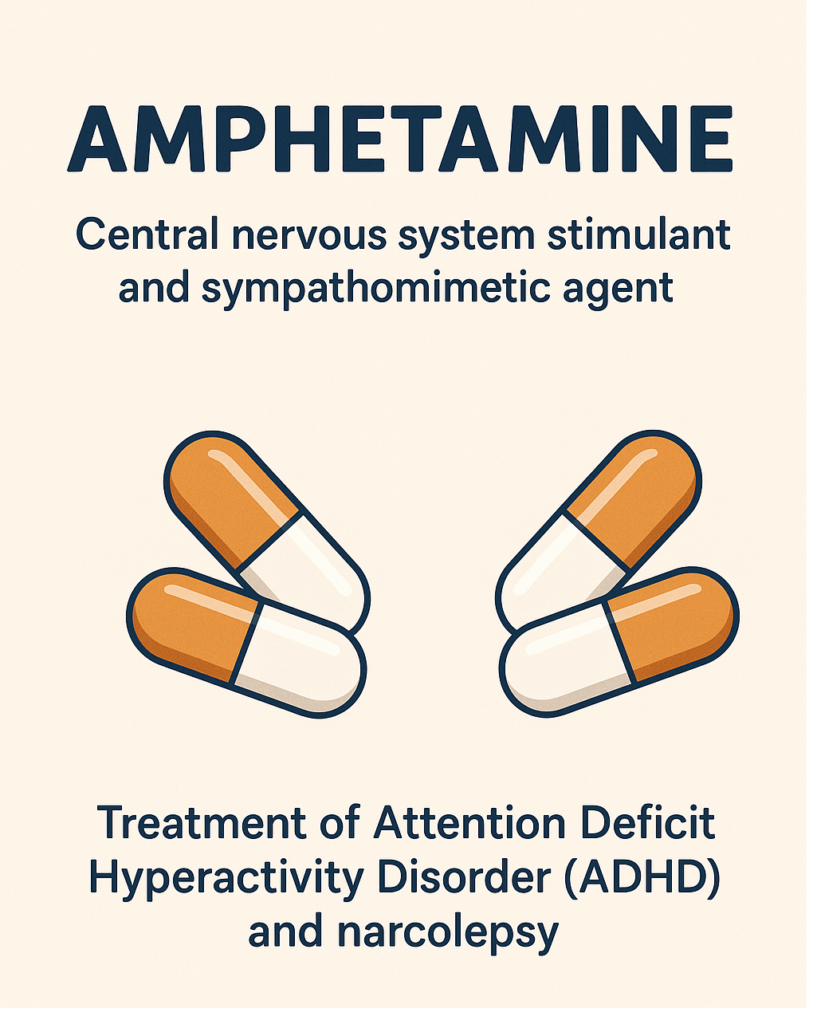
Figure 3 Amphetamine. Cathinone vs Amphetamine
Pharmacokinetically, amphetamine is well absorbed orally, with bioavailability exceeding 75% and peak plasma levels reached 1–3 hours post-ingestion. The drug distributes widely (volume of distribution ~4 L/kg) and is only moderately protein-bound (~20%). It is metabolized primarily in the liver via CYP2D6-mediated pathways, producing metabolites such as 4-hydroxyamphetamine, 4-hydroxynorephedrine, hippuric acid, and phenylacetone. Approximately 40% of an administered dose is excreted unchanged in urine, and elimination is strongly influenced by urinary pH. The half-life varies by isomer (d-amphetamine: 9–11 hours; l-amphetamine: 11–14 hours), with renal impairment reducing clearance.
Therapeutically, amphetamine improves school performance, behavior, and cognitive function in ADHD. It is also used off-label for depression, obesity, and chronic pain. Methamphetamine, a closely related compound, shares amphetamine’s mechanism of action but has a methyl group that increases CNS penetration and abuse potential. Recreational use, especially via smoking, leads to rapid dopamine release in striatal regions, contributing to euphoria, addiction, and potential neurotoxicity. Chronic abuse may reduce dopamine transporter levels, impair cognition, and increase the risk of psychiatric symptoms such as paranoia.
Adverse effects include cardiovascular complications (hypertension, arrhythmias), CNS effects (agitation, hallucinations), gastrointestinal disturbances, and in severe overdose, hyperthermia, seizures, renal or hepatic injury, and coma. While animal studies show no evidence of carcinogenicity or reproductive toxicity, recreational abuse poses significant health risks. Treatment of methamphetamine addiction currently relies on psychosocial interventions, with experimental approaches exploring low-dose amphetamine substitution, cognitive enhancers, or receptor-targeted medications.
Amphetamine remains a critical therapeutic agent with a dual profile of medical benefit and potential for abuse, requiring careful clinical management and monitoring. Its pharmacology exemplifies the complex interplay between neurotransmitter systems in both therapeutic and recreational contexts.

2-Minute Neuroscience: Amphetamine
Conclusion
Cathinone vs Amphetamine demonstrates how minor chemical differences can lead to significant variations in pharmacological effects, potency, and safety profiles. Amphetamine, as a synthetic stimulant, provides stronger and more controlled central nervous system effects, with well-documented therapeutic applications in ADHD and narcolepsy. Cathinone, the primary active alkaloid in khat, produces milder psychostimulant effects but carries a higher risk of acute cardiovascular reactions and unpredictable pharmacokinetics due to its natural origin and chemical lability. Both compounds share similar mechanisms, primarily affecting dopaminergic and noradrenergic systems, but their differences in duration of action, receptor activity, and potential for toxicity highlight the importance of understanding each substance’s unique profile. Careful consideration of these distinctions is essential for medical, recreational, and public health perspectives, emphasizing the need for informed usage and regulatory attention.
Bibliography
- https://en.wikipedia.org/wiki/Cathinone
- https://psychonautwiki.org/wiki/Amphetamine
- Brenneisen, R., Fisch, H., Koelbing, U., Geisshusler, S. and Kalix, P. (1990), Amphetamine-like effects in humans of the khat alkaloid cathinone.. British Journal of Clinical Pharmacology, 30: 825-828. https://doi.org/10.1111/j.1365-2125.1990.tb05447.x
- https://www.ajol.info/index.php/eamj/article/view/46651
- https://go.drugbank.com/drugs/DB00182
- Stephen J. Kish Pharmacologic mechanisms of crystal meth CMAJ Jun 2008, 178 (13) 1679-1682; DOI: 10.1503/cmaj.071675 https://www.cmaj.ca/content/178/13/1679
- Martin D. Schechter, John A. Rosecrans, Richard A. Glennon, Comparison of behavioral effects of cathinone, amphetamine and apomorphine, Pharmacology Biochemistry and Behavior, Volume 20, Issue 2, 1984, Pages 181-184, ISSN 0091-3057, https://doi.org/10.1016/0091-3057(84)90238-7. https://www.sciencedirect.com/science/article/abs/pii/0091305784902387
- Elizabeth A. Pehek, M.D. Schechter, B.K. Yamamoto, Effects of cathinone and amphetamine on the neurochemistry of dopamine in vivo, Neuropharmacology, Volume 29, Issue 12, 1990, Pages 1171-1176, ISSN 0028-3908, https://doi.org/10.1016/0028-3908(90)90041-O. https://www.sciencedirect.com/science/article/abs/pii/002839089090041O
- Tyler Nichols, Proma Khondkar, Simon Gibbons, The psychostimulant drug khat (Catha edulis): A mini-review, Phytochemistry Letters, Volume 13, 2015, Pages 127-133, ISSN 1874-3900, https://doi.org/10.1016/j.phytol.2015.05.016. https://www.sciencedirect.com/science/article/abs/pii/S1874390015001135
- Lauren R. Fitzgerald, Brenda M. Gannon, Donna Walther, Antonio Landavazo, Takato Hiranita, Bruce E. Blough, Michael H. Baumann, William E. Fantegrossi, Structure-activity relationships for locomotor stimulant effects and monoamine transporter interactions of substituted amphetamines and cathinones, Neuropharmacology, Volume 245, 2024, 109827, ISSN 0028-3908, https://doi.org/10.1016/j.neuropharm.2023.109827. https://www.sciencedirect.com/science/article/abs/pii/S0028390823004173